Does That Toy Actually Spark Creativity—Or Is It Just Keeping the Kids Occupied?
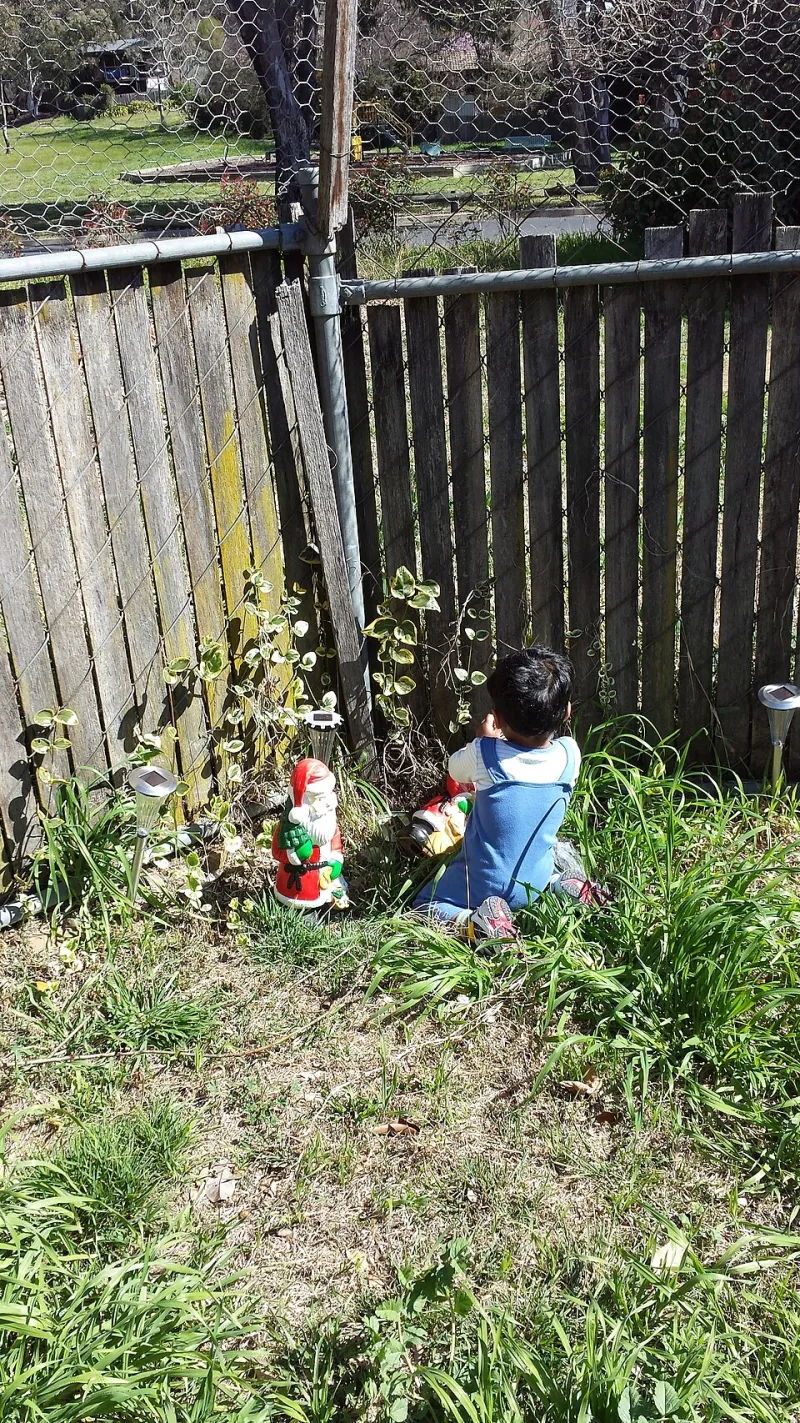
Photo: ArtOfHappiness, CC BY-SA 4.0, via Wikimedia Commons
Every mom has been there. You buy something that looks amazing on the box—colorful, stimulating, "educational"—and within a week, it's collecting dust. Meanwhile, your kid is in the corner making up elaborate stories with a cardboard box and a handful of popsicle sticks. There's a lesson buried in that moment, and it's one that child development researchers have been talking about for years.
Not all play is created equal. And not all toys that claim to spark creativity actually do. So how do you tell the difference between a toy that genuinely fires up a child's imagination and one that's just... keeping them quiet?
The Difference Between Active and Passive Play
Before we get into specific toy features, it helps to understand what psychologists mean when they talk about open-ended versus closed-ended play.
A closed-ended toy has one correct way to use it. Think of a shape-sorter with specific holes, or a toy that plays a song when you press a button. These toys absolutely have their place, especially for younger children building foundational skills. But they don't leave much room for imagination—there's a right answer, and the toy tells you when you've found it.
An open-ended toy, on the other hand, has no single correct use. A set of wooden blocks can be a castle, a spaceship, a kitchen, or a city depending on the day and the child. Play dough becomes whatever a child imagines it to be. A simple scarf becomes a cape, a river, a magic carpet.
"Open-ended toys act as a blank canvas," explains Dr. Miriam Kessler, a developmental psychologist based in Chicago who consults with schools and early childhood programs. "When a toy doesn't tell a child what to do, the child has to generate the story themselves. That's where creative thinking, problem-solving, and emotional processing all happen simultaneously."
The challenge for parents is that open-ended toys often look less impressive on a store shelf than their flashier counterparts. A bag of wooden peg dolls doesn't light up or make sounds. But hand them to a four-year-old and watch what happens.
What the Research Actually Says
A growing body of research supports what many child development specialists have long argued: children who engage regularly in imaginative, self-directed play show stronger creative thinking skills, better emotional regulation, and more advanced language development.
A study published in the journal Infant Behavior and Development found that babies and toddlers who played with simple, less-stimulating toys engaged in more complex, language-rich play than those who played with electronic toys. The researchers noted that the electronic toys—despite being marketed as educational—actually reduced parent-child interaction and verbal engagement.
That's not a knock on all technology or all structured toys. It's a reminder that what a toy does to your child matters far less than what it invites your child to do.
The Marketing Problem: What "Creative" Actually Means on Packaging
Walk through any major toy retailer and you'll see the word "creative" plastered on roughly half the packaging. It's one of the most overused buzzwords in the industry, and it often means very little.
Here's a quick reality check on common marketing claims:
- "Encourages creativity" — Often means there's a coloring sheet included or the toy has multiple color options. Not the same as genuinely open-ended design.
- "STEM-approved" — A legitimate category, but many STEM toys are highly prescriptive (follow these steps to build this specific thing), which limits creative application.
- "Educational" — Virtually meaningless without context. What skill does it develop? How? At what age? For how long?
- "Imaginative play" — Look carefully. Does the toy require imagination, or does it supply an entire narrative that kids just participate in?
That last point is important. A toy based on a licensed character from a movie or TV show often comes pre-loaded with a storyline. Children tend to replay the show's plot rather than invent their own. That's not inherently bad—kids process stories they love through play—but it's different from generative creative thinking.
Design Features That Actually Signal Creative Potential
Once you know what to look for, evaluating a toy's creative potential becomes much more intuitive. Here are the features that developmental experts and experienced parents consistently point to:
Ambiguity of form. Does the toy look like one specific thing, or could it be many things? A set of loose parts—wooden discs, colored stones, fabric scraps—invites infinite interpretations. A toy that looks exactly like a branded spaceship from a specific movie does not.
Absence of a predetermined outcome. Can the child "win" or "finish" this toy? If yes, it's likely closed-ended. If the play can go on indefinitely in different directions, that's a green flag.
Tactile and sensory richness. Toys that engage multiple senses—different textures, weights, sounds, and temperatures—naturally invite more exploratory, inventive play. This is especially true for children under seven, whose creative thinking is deeply tied to physical sensation.
Scalability across ages. A toy that a two-year-old and a seven-year-old can both use meaningfully, just differently, is almost always open-ended by design. That versatility is a direct result of the toy not prescribing a single use.
Simplicity over complexity. Counterintuitively, the less a toy does on its own, the more a child has to bring to it. Complexity in the child's imagination is the goal—not complexity in the toy's mechanics.
A Framework for Evaluating Toys Before You Buy
Next time you're standing in a toy aisle or scrolling through a product page, try asking yourself these five questions:
- Who is doing the work here—the toy or the child? If the toy is doing most of the entertaining, the child is a passive audience, not an active creator.
- How many different ways could this be used? Try to think of at least five. If you can't, neither can your kid—at least not for long.
- Does it require a specific narrative, or does it invite a new one every time? There's a real difference between playing with a story and creating one.
- Would this toy work without batteries or a screen? Analog play tends to demand more from a child's imagination.
- What does the child have to add to make this work? The best creative toys need the child to complete them.
What Moms in Our Community Are Actually Using
We asked our readers to share the toys that have genuinely sparked creativity in their homes—the ones that never seem to get old. The answers were telling.
Magnetile-style building sets came up repeatedly, not because of any single feature, but because kids use them to build structures, tell stories, create light displays, and invent games that didn't come with instructions. Beeswax modeling clay showed up again and again for younger children. So did simple dollhouses with minimal, non-branded furniture. Art supply kits—not the ones with a step-by-step project guide, but the ones with blank materials and room to experiment—were consistently mentioned by moms of older kids.
The common thread? None of these toys told kids what to do. They just showed up and waited.
The Takeaway for Moms
You don't have to become a child development researcher to make smarter toy choices. You just have to shift the question you're asking at the store. Instead of "Will my kid like this?" ask "What will my kid have to bring to this?" The toys that demand something from your child—curiosity, imagination, problem-solving, storytelling—are the ones that genuinely grow with them. And those are almost always the toys that end up being the most loved.