Beyond Fidget Spinners: How to Actually Match Toys to Your Child's Sensory Needs
For a hot minute there, it seemed like every kid in America had a fidget spinner. Then came the pop-its. Then the squishy toys, the kinetic sand, the sensory bins, the weighted stuffed animals. The sensory toy market has exploded — and while a lot of these products are genuinely useful, the trend-driven way most families end up with them is, to put it nicely, a little chaotic.
You end up with a basket of squishy things your kid touched once, a bin of kinetic sand that's now mostly on the carpet, and a fidget cube that lives in the couch cushions. Meanwhile, your child is still chewing on their shirt collar and spinning in circles, which is their actual sensory need going unaddressed.
Here's a more intentional way to think about sensory play — one that starts with your individual child instead of whatever's going viral on TikTok.
What "Sensory" Actually Means in Play
Sensory play refers to any play that actively engages a child's senses — touch, sound, sight, smell, proprioception (body awareness), and vestibular input (balance and movement). Young children are literally wiring their brains through sensory experience, which is why babies mouth everything and toddlers dump things out constantly. It's not chaos. It's neurodevelopment.
As kids get older, sensory play continues to serve important functions: it helps regulate emotions, supports attention and focus, and can be genuinely calming or energizing depending on what a child needs in the moment.
The problem is that "sensory toy" has become a marketing category more than a developmental one. Slapping the word "sensory" on a product doesn't mean it's actually meeting a real need — it might just mean it has a satisfying texture or makes a pleasing sound.
The Three Sensory Profiles (And Where Your Kid Might Land)
Children generally fall into one of three broad sensory profiles, though many kids show traits from more than one category.
The Sensory Seeker craves intense input. This is the kid who always wants to be spinning, jumping, crashing into things, touching everything in the store, eating foods with strong flavors, or playing music at maximum volume. They're not being difficult — their nervous system is asking for more input than the average environment provides.
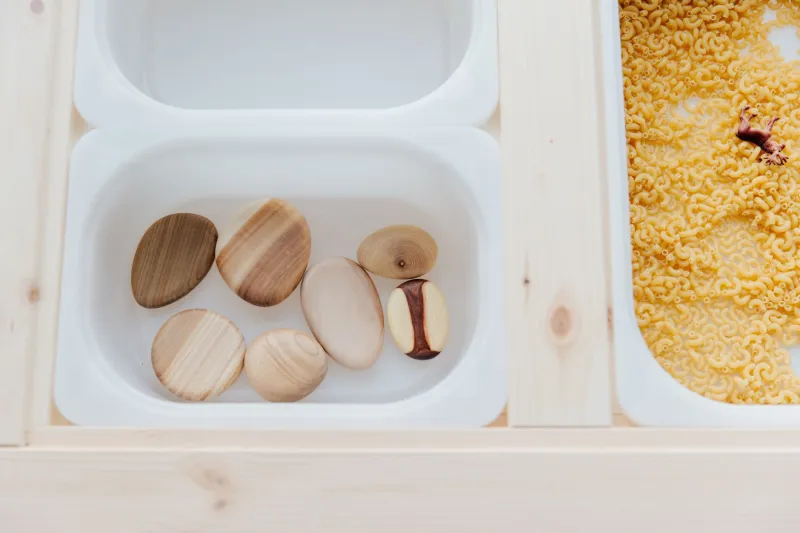
For seekers, the best toys deliver big, satisfying physical feedback: trampolines, crash pads, heavy play equipment, textured sensory bins with varied materials, drums or instruments they can really pound on, clay or dough they can knead hard.
The Sensory Avoider finds certain inputs genuinely overwhelming. Scratchy tags are unbearable. Loud toys create real distress. Certain textures are a hard no. These kids often get labeled as "picky" or "difficult," but they're actually processing sensory input more intensely than most people do.
For avoiders, the goal is to offer sensory experiences that are comfortable and predictable, while very gradually introducing new ones. Smooth textures, quiet toys, visually calm materials (think: solid colors rather than flashing lights), and anything that gives them a sense of control over the sensory experience.
The Sensory Fluctuator shifts between seeking and avoiding depending on the day, the time, or their overall stress level. They might love the sensory bin on a calm Tuesday and completely refuse it on a chaotic Friday afternoon. These kids need flexibility — a toy collection with options at both ends of the spectrum so they can self-select based on what their nervous system needs.
A Simple Sensory Audit for Your Toy Collection
Before you buy anything new, try this quick audit of what you already have.
Dump everything out (metaphorically — or literally, if you're brave) and sort by sensory category:
Tactile (touch): What textures do your toys offer? Smooth plastic, rough fabric, squishy foam, gritty sand, slippery slime, bumpy rubber? A well-rounded tactile collection has variety. If everything is smooth plastic, your child isn't getting much tactile input at all.
Auditory (sound): Are the sounds in your toy bin loud and stimulating, soft and musical, or somewhere in between? A child who covers their ears at loud toys doesn't need more noise-making toys — they need quieter options. A seeker who ignores soft toys might need something with more sonic punch.
Visual: Flashing lights and bright contrasting colors are stimulating. Wooden toys in natural tones are calming. Neither is better — but if your child seems visually overstimulated often, it's worth looking at whether the toys themselves are contributing to that.
Proprioceptive (body awareness): This is the category most toy collections miss entirely. Heavy lifting, pushing, pulling, and carrying toys give the body feedback that helps kids regulate. Think: pull-along toys, weighted lap pads, play tools, or even just a wheelbarrow toy they can fill and push around the yard.
Vestibular (balance and movement): Swings, balance boards, rocking toys, and anything that challenges a child's sense of balance feeds this system. If your child seems to need to move constantly, vestibular input toys can help meet that need in a focused way.
Making Intentional Additions
Once you know what your child's sensory profile looks like and what your current toy collection is missing, you can shop with actual intention instead of just grabbing whatever's trending.
A few principles to guide you:
Match to the child, not the trend. A pop-it is great for a child who needs light, repetitive tactile input. It's not particularly useful for a seeker who needs heavy proprioceptive feedback. Know the difference before you add to your cart.
Introduce new textures slowly. If your child is a sensory avoider, a new textured toy isn't going to work if you just hand it to them. Let them observe it first. Let them touch it on their own terms. Make the introduction low-pressure.
Rotate sensory toys. Just like regular toy rotation keeps things fresh, sensory toys can lose their regulatory effect when they become too familiar. Rotating them in and out keeps the sensory input novel and effective.
Pay attention to timing. Sensory toys work best when they're matched to what a child needs in the moment. A calming sensory bottle (water and glitter, slow and mesmerizing) is great before bedtime. A high-energy crash pad is not. Knowing which toys serve which purpose helps you reach for the right one.
A Word on Sensory Toys and Neurodivergent Kids
For kids with sensory processing differences — including many autistic children, kids with ADHD, and children with sensory processing disorder — intentional sensory play isn't optional. It's genuinely therapeutic. If your child has significant sensory needs, it's worth working with an occupational therapist to build a sensory diet that goes beyond what any toy collection can do on its own.
But for all kids, sensory-aware play is simply good developmental practice. You don't need a diagnosis to benefit from understanding how your child experiences the world through their senses.
The Bottom Line
Sensory toys are worth buying — but only when they're the right sensory toys for your specific child. Skip the trend-chasing. Do a quick audit of what you have, figure out where your child lands on the sensory spectrum, and fill the actual gaps. Your kid's nervous system will thank you. And honestly? So will your carpet.