Playing Alone, Playing Together: What Your Kid's Toy Preferences Actually Tell You
There's a moment a lot of parents recognize: you've set up a playdate, the other kid arrives, and within ten minutes your child has retreated to their room to play with their LEGOs alone. Not because they're upset. Not because they don't like the other kid. Just... because that's what they wanted to do.
Cue the parental spiral. Are they antisocial? Is something wrong? Should you intervene?
Probably not. But it is worth understanding what's actually going on — and how the toys in your house are either helping or quietly shaping your child's relationship with solo and social play.
First, Let's Talk About Play Personalities
Children have distinct play personalities, and those personalities shift as they grow. A two-year-old doing parallel play (sitting next to another kid, doing their own thing) is developmentally right on track. A seven-year-old who consistently prefers solitary play isn't necessarily a red flag — they might just be an introvert, a deep focuser, or someone who genuinely recharges through independent creative work.
The same goes for the kid who can't seem to play alone for five minutes. That's not neediness — it might just mean they're wired for connection and they process the world through interaction.
Neither style is wrong. But knowing which way your child leans helps you build a toy collection that actually supports them — and gently stretches them in the right direction when needed.
Toys That Pull Kids Inward
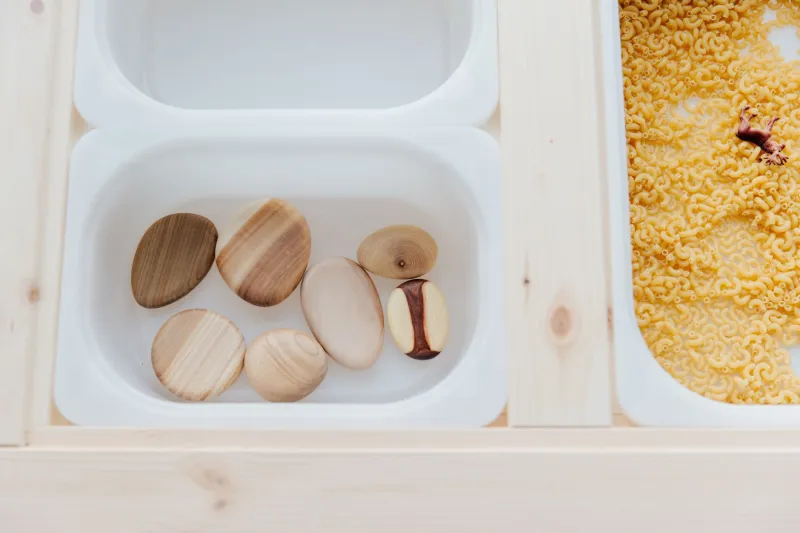
Some toys are almost designed for solo focus. Building sets, puzzles, drawing supplies, sensory bins, solo card games — these invite a child to go deep on their own. There's nothing wrong with that. Solo play builds concentration, self-regulation, problem-solving, and the ability to tolerate (even enjoy) being alone with one's own thoughts. Those are genuinely important life skills.
Kids who gravitate toward these toys often get unfairly labeled as "shy" or "introverted" when really they're just focused. If your child can spend an hour arranging and rearranging a marble run by themselves, they're not missing out on social development — they're building a different but equally valuable set of skills.
That said, a toy box that's only solo-focused can quietly reinforce a pattern of avoiding the social risk that comes with shared play. It's not a cause for alarm, but it's worth noticing.
Toys That Pull Kids Together
On the flip side, some toys are almost magnetically social. Board games, cooperative card games, team-based outdoor gear (think: a badminton set, a parachute toy, a jump rope), building sets large enough for two — these naturally require or reward another person.
For kids who are already social, these toys are pure joy. For kids who tend toward solitude, they can be a low-stakes entry point into shared play because the toy itself creates the structure. Nobody has to figure out how to interact — the game tells you what to do. That scaffolding can be genuinely helpful for a child who finds unstructured social situations overwhelming.
If you have a child who gets anxious about playdates but loves games, leaning into structured play options might be your best bridge.
The Guilt Around Solitary Play
Let's be honest: there's a weird cultural pressure in American parenting culture around socialization. We worry if our kids aren't constantly playing with others, collaborating, making friends, being team players. And while social development absolutely matters, the anxiety around solo play is often overblown.
Research actually supports the value of solitary play well past toddlerhood. Kids who can play independently tend to be better at self-direction, more creative, and more comfortable with their own company — which matters a lot as they get older.
If your child loves to play alone, the goal isn't to fix that. It's to make sure they also have enough experience with shared play that they can navigate it when they need to — at school, at parties, in team situations.
What Shared Play Actually Teaches
When two kids are fighting over who gets to be the captain of the spaceship, something important is happening. They're negotiating. They're reading social cues. They're learning to manage disappointment when they don't get what they want, and satisfaction when they find a compromise.
Those micro-negotiations are some of the richest social learning a child can do, and they happen most naturally through play. Toys that require sharing, turn-taking, or collaborative problem-solving create those moments organically — no lecture required.
A few toys that consistently create natural social opportunities:
- Cooperative board games — players work together instead of competing, which lowers the stakes and makes collaboration feel rewarding
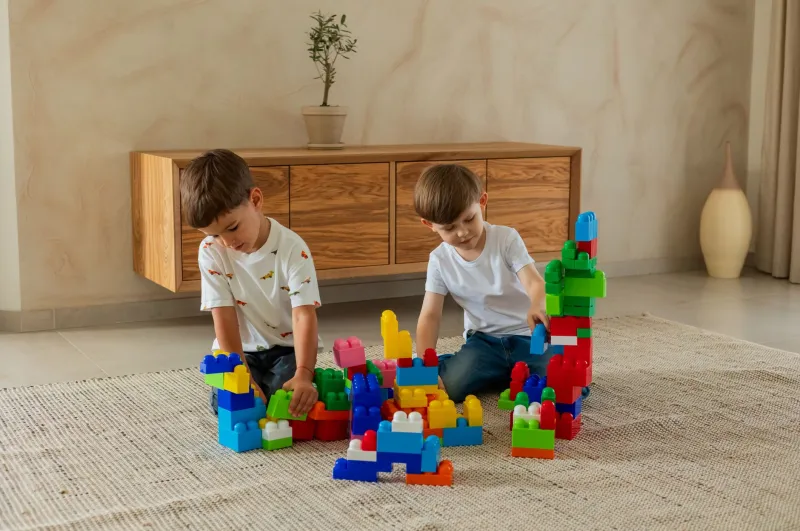
- Large-scale building sets — two kids building a fort or a massive block tower together will inevitably have to communicate
- Outdoor group games — anything that requires more than one person to work (a two-person swing, a teeter-totter, a ball that needs to be thrown and caught) builds connection through shared physical activity
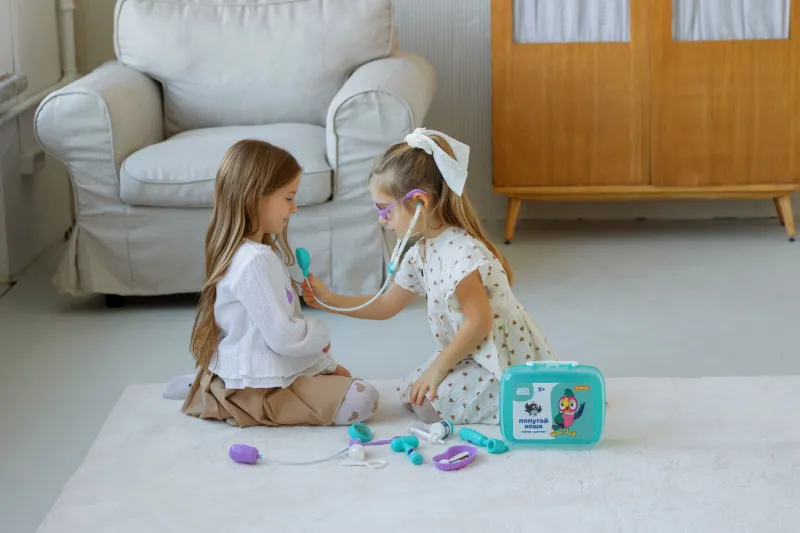
- Dramatic play props — a costume box or a play kitchen invites other kids in because the scenario is more fun with more characters
Gently Expanding the Solo Player's World
If your child strongly prefers solo play, there are some low-pressure ways to introduce more social toy experiences without forcing it.
Start with a shared interest. If your kid loves trains, find a train set big enough that another child could add to it — and then invite a friend over to build together. The shared passion makes the social part feel less like a chore.
Try games with clear rules. For kids who find unstructured social interaction draining, a game with defined roles and turns removes a lot of the social uncertainty. They know what to do and when to do it.
Let them lead. A child who's been given control over a playdate activity — "you pick the game" — is more likely to engage socially because they're not navigating someone else's agenda.
What About the Kid Who Can't Play Alone?
This one gets less attention, but it's just as real. Some kids struggle to entertain themselves for even short stretches. They need a parent, a sibling, or a friend involved at all times.
For these kids, building in some independent play time — with a toy that genuinely interests them — is worth prioritizing. Start small. Ten minutes of solo play with a puzzle or an art project, then back to you. Gradually lengthen it. It builds self-sufficiency and gives them a skill they'll need at school, during rest time, and eventually just in life.
The Real Takeaway
Your child doesn't need to be perfectly balanced between solo and social play. They need a toy collection that meets them where they are and gently nudges them toward growth. Watch what they choose when no one's telling them what to do. That's your most honest data point — and a pretty good shopping guide too.