Story Time, Play Time: How Much Narrative Does Your Child's Toy Box Actually Need?
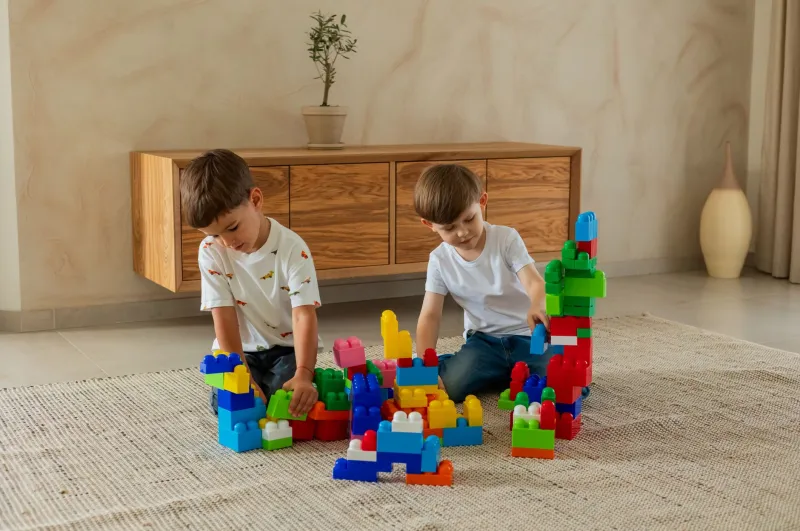
Picture two kids, same age, same rainy Saturday afternoon. One is deep in a sprawling adventure with a dragon figurine, a castle playset, and a very specific storyline involving a stolen golden acorn. The other has dumped out a bin of wooden blocks and is quietly building something that defies architectural logic — no characters, no plot, just pure construction and focus.
Both kids are doing exactly what they should be doing. But their play styles couldn't look more different. And if you're a parent trying to figure out which toys to buy, that difference matters a lot.
What We Mean by Narrative Play
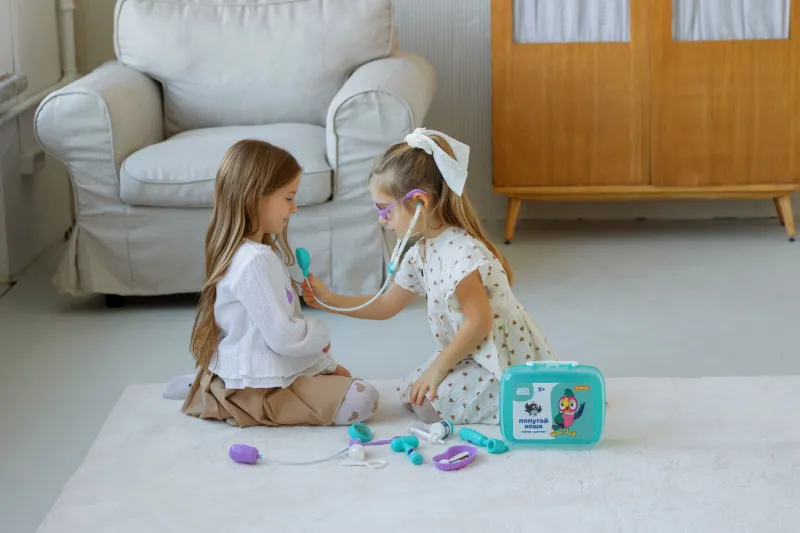
Narrative play is any kind of play where a story is happening — either one the toy provides or one the child invents. It's the imaginative play that researchers sometimes call "sociodramatic play" or "pretend play," and it shows up in everything from dollhouse scenarios to elaborate superhero battles to a kid pretending a cardboard tube is a microphone and performing a concert for the dog.
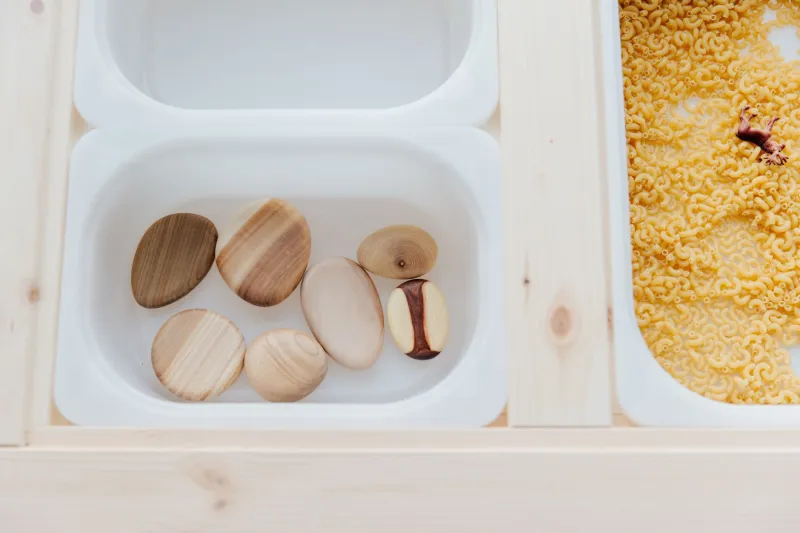
Toys fall on a spectrum here. On one end, you've got highly scripted toys — think licensed character sets, story-based playsets, or games that come with their own lore baked in. On the other end, you've got open-ended toys: blocks, loose parts, plain art supplies, sandbox tools. These don't come with a story. They invite one.
Most kids use both. But the ratio — how much scripted narrative versus blank-slate freedom — varies wildly from child to child, and even from phase to phase as they grow.
Why Narrative Matters for Development
Here's the part that might surprise you: story-based play isn't just cute. It's genuinely important for cognitive and emotional growth. Research in early childhood development consistently links pretend play with stronger language skills, better emotional regulation, and improved social understanding. When kids act out stories — whether they invented them or borrowed them from a toy's packaging — they're practicing perspective-taking, sequencing, and cause-and-effect thinking.
That means the kid who spends 45 minutes narrating a dramatic rescue mission with their action figures isn't goofing off. They're building real mental skills.
But here's the nuance: there's a difference between narrative play that a child drives and narrative play that a toy dictates. A toy that comes loaded with characters, a setting, and a pre-existing story can be a helpful launchpad — especially for younger kids who are still learning how to construct a plot. But it can also become a ceiling if a child never gets the chance to invent their own.
The Blank Slate Kids
Some children are natural world-builders. Give them a pile of mismatched figures, a few scarves, and some empty boxes, and they'll construct an entire civilization complete with political drama. These kids often find heavily scripted toys frustrating — the story is already written, and they didn't write it.
If your child tends to remix toys rather than use them as intended, regularly invents new rules for games, or gets more excited about the box a toy came in than the toy itself, you're probably raising a blank-slate kid. They need open-ended materials to thrive creatively.
For these kids, the sweet spot is toys that have potential without having prescription. Think: a set of wooden animals with no particular backstory, a bag of colorful felt squares, or a basic puppet kit that they can dress however they want.
The Story-Hungry Kids
Other children find open-ended play genuinely uncomfortable. A pile of blocks and no instructions can feel less like freedom and more like being dropped in the middle of the ocean without a map. These kids often gravitate toward toys with characters they already know and love, because the pre-existing story gives them a scaffold to hang their play on.
That's not a limitation — it's a learning style. And for many kids, starting with a scripted narrative is actually how they develop the ability to create their own. They practice the structure of storytelling through someone else's plot first, then gradually branch off into their own territory.
If your child tends to re-enact scenes from their favorite shows, wants toys that match specific characters, or seems to need a starting point before they can get going, they're probably story-hungry. Lean into licensed playsets and character-based toys, but mix in a few open-ended additions over time.
Building a Balanced Toy Box
The goal isn't to pick a side. It's to have enough of both types that your child can move between them depending on their mood, age, and what kind of play they need in a given moment.
A few practical ways to think about balance:
Start with what your child already does. Watch them play without intervening. Are they narrating? Constructing? Sorting? Performing? Their natural tendencies will tell you a lot about where they are right now.
Add open-ended toys gradually. If your child is heavily into scripted play, don't overhaul their toy box overnight. Introduce one or two open-ended toys at a time and observe how they engage with them.
Let the story evolve. A licensed character toy doesn't have to stay in its original story. Some kids naturally start using a princess figure in a space adventure or a dinosaur in a hospital setting. That creative drift is a sign of growing narrative confidence.
Don't panic about the plot. If your six-year-old's story involves a dragon running a pizza restaurant, you're witnessing narrative development in action. The logic doesn't have to make adult sense.
A Note on Screen-to-Toy Crossover
One thing worth mentioning: a lot of today's narrative toys are tied to screen content — shows, movies, video games. That's not automatically a problem, but it's worth being intentional. Toys that are purely merchandise with no play value beyond re-enacting a scene can limit a child's narrative range. The best story-based toys, even licensed ones, have enough flexibility that a kid can take the characters somewhere new.
When you're shopping, ask yourself: could my child use this toy in a story they invented? If the answer is yes, you're probably in good shape.
The Bottom Line
Your child's toy box doesn't need to be all blank slates or all scripted stories — it needs to reflect how your kid actually plays. Some kids need the narrative scaffold. Some need the creative freedom. Most need a little of both, in different amounts at different ages.
Pay attention to what's getting used and what's collecting dust. That's your child telling you, in the clearest possible way, exactly what kind of play they need right now.