What Your Kid Actually Wants to Play With vs. What the Internet Keeps Telling You to Buy
Somewhere between the unboxing video and the checkout page, a lot of parents lose the plot. It starts innocently enough — you're scrolling, you see a toy getting absolutely wild engagement, the comments are full of parents saying their kids are obsessed, and suddenly you're convinced you've been missing something essential. Two-day shipping later, the toy arrives. Your kid plays with it for eleven minutes and wanders off.
Sound familiar?
The gap between what goes viral and what actually gets played with is one of the most consistently frustrating parts of modern toy-buying. And it's not because you made a dumb decision. It's because the systems driving those recommendations — social algorithms, influencer marketing, seasonal toy hype — are genuinely not designed with your specific child in mind.
Here's how to cut through the noise.
Why Viral Toys Look So Convincing
First, a little grace for yourself: viral toy content is engineered to be persuasive. The best-performing toy videos on TikTok and Instagram aren't random — they're often sponsored, carefully staged, or shot with kids who have been coached (however gently) to perform enthusiasm. The lighting is good, the reactions are big, and the editing is tight.
None of that is necessarily dishonest. But it is optimized for engagement, not accuracy. A toy that photographs beautifully and triggers satisfying sound effects on camera might be deeply boring in the hands of a real eight-year-old who's more into narrative play than sensory gadgets.
The other thing algorithms do really well is create a sense of urgency and universality. When the same toy keeps appearing in your feed, it feels like everyone has it — like your kid is the only one missing out. That's the algorithm doing its job. It's not a reflection of reality.
Real Parents, Real Play
We talked to a few parents about the disconnect between what they bought based on online hype and what their kids actually gravitated toward.
Jamila, mom of a seven-year-old in Atlanta, bought a highly-recommended kinetic sand set after seeing it everywhere online. "My daughter touched it twice and decided she'd rather make up stories with her old dollhouse figures," she said. "The sand is still in the closet. Meanwhile, she's been playing with the same three stuffed animals for two years."
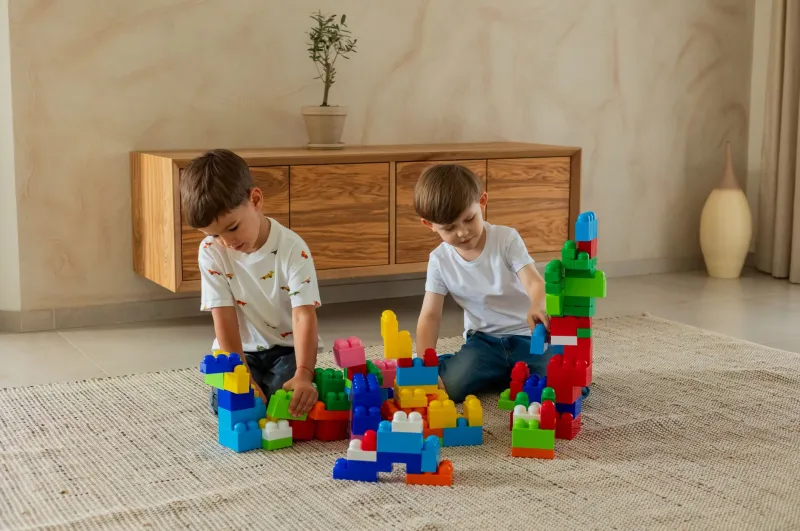
Marcos, dad of twin boys in Denver, had a different experience with a trending building set — one that he almost skipped because it seemed too simple compared to flashier options. "It wasn't viral or anything. I just noticed they kept gravitating toward the blocks at their cousin's house. Bought a basic set, and they've used it almost every day for six months."
The common thread? The toys that actually stuck were the ones tied to something the child was already showing interest in — not the ones that looked great in a 30-second video.
How to Read Your Child Instead of the Feed
The most reliable toy research you can do costs nothing and takes about a week of paying attention. Here's what to look for:
What do they return to? The toys that get touched once and forgotten are not the same as the ones a kid circles back to without prompting. Notice what your child picks up again and again — especially when they have free choice.
What do they do with unstructured time? If your kid has an hour with no agenda, what do they reach for? What kind of play do they invent? This is hugely informative. A child who builds elaborate scenarios with small figures probably doesn't need another light-up gadget — they need more figures, more settings, more story material.
What do they talk about? Kids announce their interests constantly. The dinosaur obsession, the space phase, the sudden passion for cooking — these are signals. Toys that plug into genuine enthusiasm get played with. Toys that don't, don't.
What do they do at other people's houses? Kids often play freely at friends' or cousins' homes without the social pressure of performing gratitude. What do they beeline for there?
When Trends Are Actually Fine
This isn't an anti-trend manifesto. Sometimes a viral toy genuinely lines up with your kid's interests, and that's great. The problem isn't trending toys — it's buying them without filtering them through what you actually know about your child.
A few questions worth asking before you buy anything that's getting a lot of online buzz:
- Does this match something my kid is already into, or am I hoping it will create an interest?
- Have I seen my child enjoy this type of play before, or does it just look fun on screen?
- Is this toy flexible enough to grow with them, or is the novelty the whole point?
- Am I buying this for my kid, or am I buying it because I feel like I'm supposed to?
That last one is worth sitting with.
Trusting What You Already Know
Here's the thing: you know your kid better than any algorithm does. You've watched them play for years. You know whether they're a builder or a storyteller, a mover or a quiet-play kid, someone who loves company or someone who needs solo time to really get into it.
That knowledge is worth more than any trending toy list. Use it. The best toy purchases aren't the most exciting ones — they're the ones that land in a kid's hands and immediately make sense, because someone who loves them actually paid attention.
Shop the trends if you want. Just shop them through the lens of what you already know is true about your child. That's the filter that actually works.